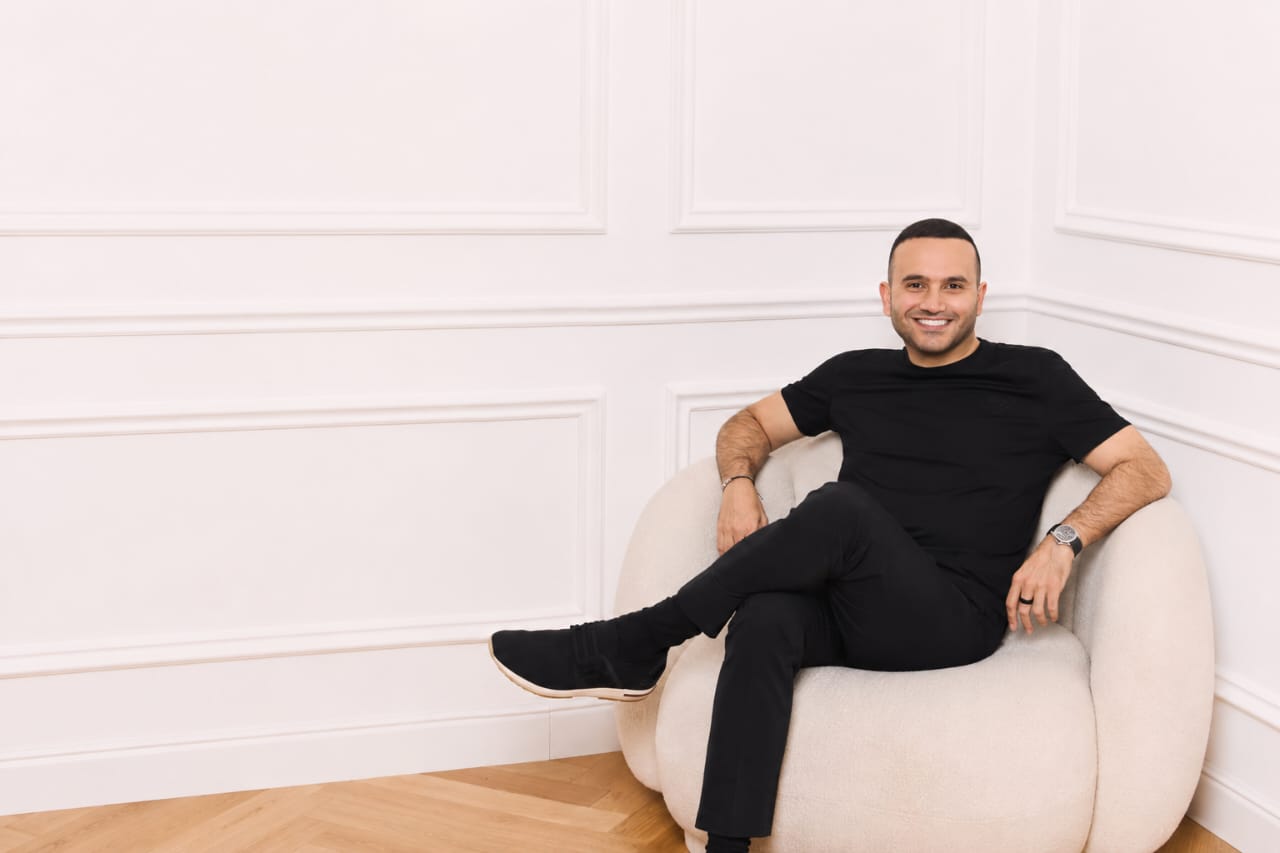
Honoring Rabih Fakhreddine, Founder & CEO of 7 Management Group, in this exclusive feature, highlighting his journey as one of the region’s youngest hospitality leaders and his role in shaping modern lifestyle-driven hospitality concepts. The conversation explores the thinking behind his entrepreneurial journey, investment outlook, global expansion strategy, and the upcoming launch of Scalini in Downtown Beirut.
1. Before building 7 Management, what ultimately pushed you toward hospitality as a long-term direction rather than a traditional business path?
Hospitality was never just about restaurants or nightlife for me. What attracted me was the ability to shape how people experience a city. I was always fascinated by places that created energy, culture, and community around them. Very early on, I realized hospitality, when done properly, becomes part of the social infrastructure of a city rather than simply a commercial business. That long-term impact is what pulled me toward the industry.
2. When you reflect on the early phase of 7 Management in 2015, what was the most defining decision or risk that significantly shaped the company’s trajectory?
The most defining decision was leaving the corporate world and stepping away from a stable managerial career at British American Tobacco to build 7 Management in Lebanon during a period of economic and political uncertainty. At the time, many people viewed it as an irrational move, especially leaving the structure and security of a multinational environment for a highly volatile industry in an unstable market.
But I believed hospitality in the region was entering a new era, one driven by original concepts, lifestyle positioning, and experience-led brands. That decision taught me very early that conviction and timing are often more important than comfort. It ultimately shaped the entrepreneurial culture and risk appetite that still define 7 Management today.
3. 7 Management is known for developing concept-driven venues rather than standalone projects. How do you evaluate whether an idea has the potential to become a lasting brand?
We evaluate concepts beyond aesthetics or trends. The first question is whether the idea has emotional relevance and whether it can consistently integrate into people’s lifestyles. A lasting brand needs operational depth, scalability, and a clear identity that can evolve over time without losing its core essence. If the concept only works because of hype, it usually has a short lifecycle.
4. What do you believe is more influential in guest loyalty today—the strength of the concept itself, or the emotional experience it creates, and how is that engineered across your venues?
The emotional experience is ultimately what creates loyalty. A concept may attract attention initially, but emotion is what creates repeat behavior and long-term connection. We engineer that through every layer of the guest journey, from spatial design and music to lighting, service culture, and energy flow inside the venue. Guests remember how a place made them feel more than what was simply served.
5. Your portfolio sits at the intersection of hospitality, entertainment, and lifestyle. In your own terms, how do you define your role within that ecosystem today?
I see my role as building ecosystems rather than individual venues. Today, hospitality is deeply interconnected with culture, entertainment, real estate, tourism, and urban identity. Our responsibility is to create concepts that contribute to how cities evolve socially and commercially.
A recent example is 25 Jump Street, where we wanted to recreate the energy, spontaneity, and social dynamics of Beirut’s streets within Dubai. The objective was not simply to open another venue, but to build a cultural environment that feels alive, interactive, and emotionally familiar to people from the region while still being relevant to an international audience.
That intersection between hospitality and cultural storytelling is where I believe the industry is heading globally, and where I see our role today.
6. As you expand beyond the region into international markets, what indicators confirm that a new geography is the right fit for your model of hospitality?
We look at three main indicators: the maturity of the consumer, the energy of the city itself, and whether there is room for differentiated lifestyle-driven concepts. We are not interested in expansion for the sake of scale alone. The market needs to align culturally with our philosophy and operational standards. Timing is equally important because hospitality is highly connected to economic and social momentum.
7. From an investment perspective, what makes hospitality a compelling sector globally, and how do you assess its long-term value compared to other industries?
Hospitality, when executed correctly, is one of the few industries that combines emotional engagement with recurring consumer behavior. Strong hospitality brands also create value far beyond direct revenue because they influence real estate, tourism, retail, and destination positioning. The sector has become increasingly attractive globally because consumers today prioritize experiences and social connection more than ever before.

8. Having built a brand rooted in Beirut and now operating internationally, what elements of your local identity remain non-negotiable in every new market?
The entrepreneurial resilience and cultural warmth that come from Beirut remain central to how we operate. Lebanese hospitality has always been about generosity, energy, adaptability, and making people feel emotionally connected to a space. Those values remain consistent across every market we enter, regardless of the concept itself.
9. With Scalini opening in Downtown Beirut, what was the strategic thinking behind introducing this concept at this specific moment in the city’s evolution?
We believe Beirut is entering a phase of gradual reactivation and renewed confidence, particularly within the hospitality and lifestyle sectors. Introducing Scalini at this moment is both a commercial and emotional statement because it reflects long-term belief in the city and in Beirut’s ability to reclaim its position as one of the region’s most important hospitality capitals.
Strategically, we also identified a clear gap in the market for a truly elevated Italian dining experience operating at international standards. Italian cuisine has universal appeal in Beirut, but we felt there was room for a concept that combines heritage, sophistication, and global brand equity in a way the market currently lacks.
For us, the project is not only about opening a restaurant. It is about contributing to the next chapter of Downtown Beirut’s revival and bringing back confidence into the city’s hospitality scene.
10. At your current scale of operations, where execution often outweighs ideas, what part of the process do you still stay directly involved in?
I remain heavily involved in concept positioning, brand direction, experience strategy, and major expansion decisions. I still spend a significant amount of time refining details around guest psychology, identity, and how concepts emotionally connect with people. As companies scale, execution becomes critical, but clarity of vision becomes even more important.