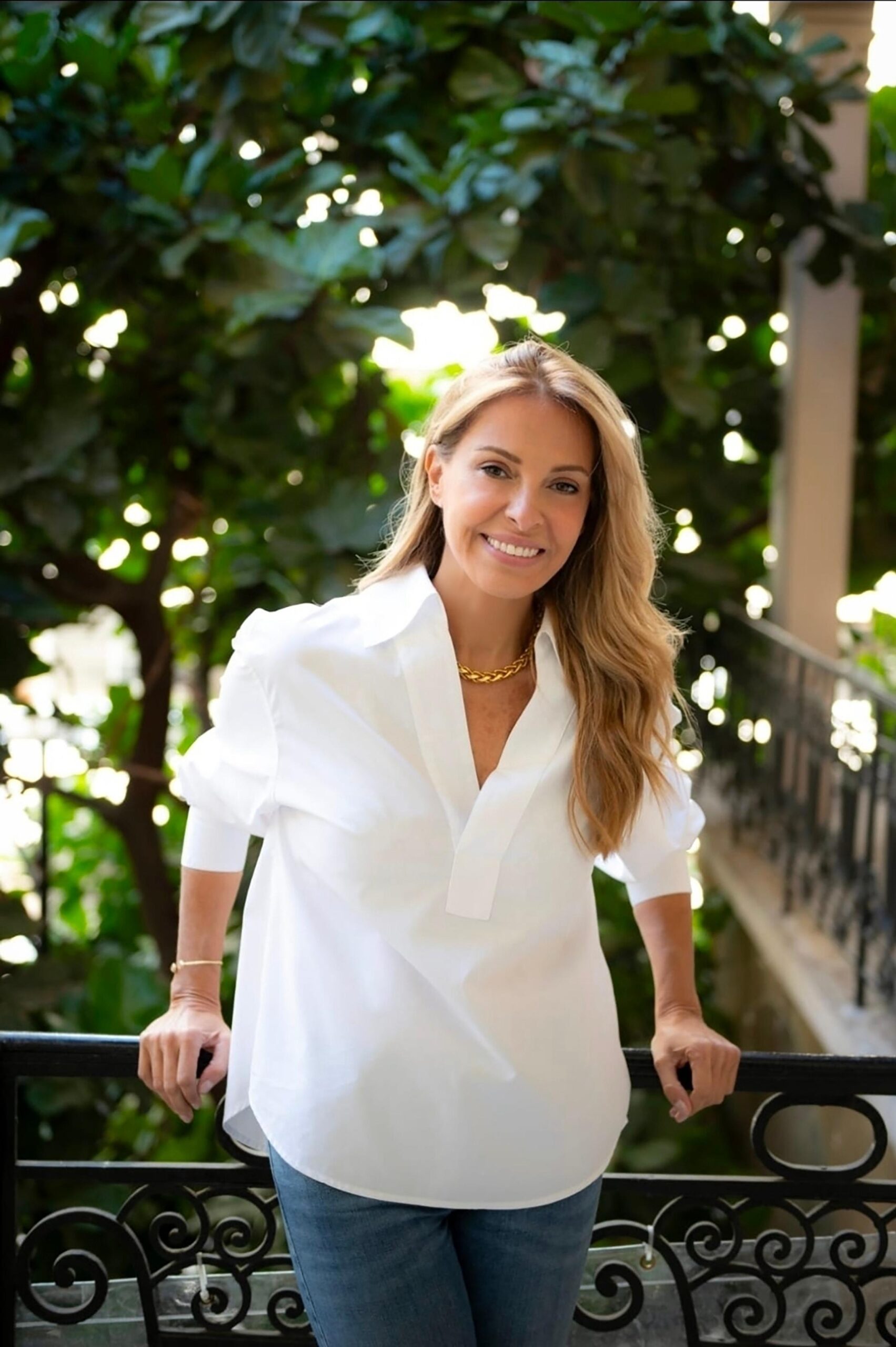
To begin, how would you introduce yourself to The Business Journal Media Group audience—beyond titles and professional roles?
I would introduce myself as someone shaped by Lebanon’s contradictions, driven by its beauty, chaos, generosity, injustice…. I believe deeply that responsibility is not inherited through position, but assumed through action. I refuse to accept decline as destiny.
You were born and raised in Ras Beirut, a uniquely cosmopolitan part of the city. How did that environment shape your worldview and sense of responsibility toward Lebanon?
Ras Beirut was a daily lesson in coexistence. Different religions, languages, political views, and social classes shared the same streets, schools, and cafés. Yet they all had one thing in common: education. Ras Beirutis take pride in intellectual achievement rather than material wealth. And its intellectual culture is legendary.
This environment taught me openness. I was free… free to think and free to choose my own path.
After the war, however, inequality became impossible to ignore. In a small country like Lebanon, seeing privilege and precarity coexist weighs on ypu. So you either engage, or you silently consent. I chose to engage.
Before founding Beit El Baraka, you built a career across multinational FMCG companies and the hospitality sector. How did that experience influence the way you later approached humanitarian work?
It taught me discipline, accountability, and systems thinking. Humanitarian work cannot rely on goodwill alone; it requires structure, efficiency, and measurable impact.
My corporate background helped me professionalise aid through clear budgets, governance, and scalability, while hospitality taught me something equally essential: attention to detail and the human experience matter just as much as numbers.
Beit El Baraka is often described as an organisation that restores dignity rather than just provide aid. What does dignity mean to you in the context of social impact?
Dignity means freedom of choice, privacy, and respect. It means refusing charity that humiliates, exposes, or reduces people to statistics.
At Beit El Baraka, beneficiaries are partners, not recipients. We design systems that allow people to live, not merely survive, without being stripped of their self-worth. Our free supermarket is a clear example: retirees receive cards with points and shop for what they need, privately and independently. Freedom means dignity. And this is our motto throughput all our services: providing access to education (so that children are free to choose their futures). Providing job opportunities (so that people are free to earn their living in a dignified manner)…
Following the August 4th, 2020 Beirut Port blast, Beit El Baraka played a major role in reconstruction and relief. What lesson from that period most deeply influenced your leadership journey?
That leadership requires courage and immediate decision-making. In moments of collapse, people don’t need speeches; they need speed, consistency, and accountability.
In 2021, you launched Beit Kanz as a social enterprise designed to financially sustain Beit El Baraka. What moment made you realise this model was necessary for long-term impact?
When donor fatigue became undeniable. Lebanon’s crises are prolonged, not episodic. Relying solely on external generosity was neither sustainable nor fair.
Beit Kanz emerged from a simple conviction: dignity-driven aid must be funded by dignity-driven work. Impact should generate its own engine.
When we received funding dedicated exclusively to heritage restoration, we negotiated with the building’s owners to occupy a flat rent-free in exchange for the renovations. That space became Beit Kanz, a farm-to-table restaurant and a platform for job creation that empowers small producers and artisans.
Beit Kanz has since become recognised as one of Lebanon’s most meaningful restaurants. What distinguishes Beit Kanz from a traditional dining experience?
At Beit Kanz, everywhere you look, there’s a story. Every object connects you to a village, a farmer, a woman producer, an artisan, or a designer.
Guests are not simply customers; they become participants in a living ecosystem where pleasure, purpose, and responsibility coexist. That”‘s what makes Beit Kanz both a unique experience and a Lebanese landmark.
The farm-to-table philosophy at Beit Kanz is deeply intentional and circular. Why was it important for you to integrate agriculture, sustainability, and hospitality into one ecosystem?
Because fragmentation is one of Lebanon’s deepest structural problems.
I wanted to build a model where nothing exists in isolation; where agriculture feeds hospitality, hospitality funds social protection, and social protection preserves heritage.
Circularity is not a trend for us; it”s a survival strategy. For example, the restaurant buys its ingredients from Beit El Baraka’s farm, covering the charity’s operating expenses, while food waste is composted and returned to the farm.
Beyond the restaurant, Beit Kanz supports artisans and women producers across Lebanon. Why is job creation, particularly for women, central to your vision?
Because when women earn, families stabilise. Women reinvest in education, health, and their communities.
In Lebanon, women’s labour, especially in rural and artisanal sectors, has long been undervalued. Supporting them is not charity; it is both sound economics and social justice. How do you personally define success, especially in a country facing ongoing economic and social challenges?
Success is continuit. It’s the ability to keep systems alive, people employed, and dignity intact despite instability.
In Lebanon, success is not expansion for its own sake; it’s endurance with integrity. The challenges are constant and unpredictable, but the results are immediate and worth every effort.
Leadership in Lebanon today is complex and demanding. What values guide your decision-making when circumstances are difficult?
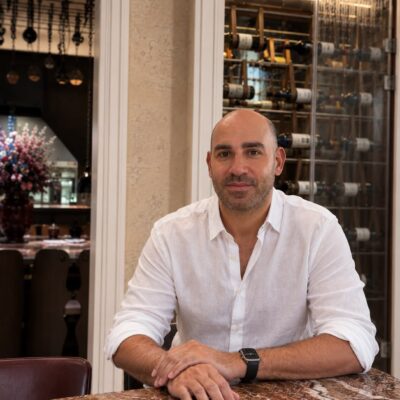
Clarity, accountability, and fairness. I try to remove emotion from decisions without removing humanity.
Transparency is non-negotiable. I cannot accept dishonesty. That can be difficult in a country where corruption has seeped into every layer of our society. Integrity remains my compass.
Is there a personal philosophy or quote that best reflects how you live and lead?
I often ask myself: What trace are you leaving behind? Does your life have purpose?
These questions guide everything I do.
Many societies still confine a woman’s purpose to marriage and children. While these are among life’s greatest joys, they should never define the limits of ambition. Every woman deserves the freedom to dream beyond expectation, to step outside her comfort zone, and to build a life of meaning and purpose.
Looking ahead, how do you envision the future of Beit Kanz and Beit El Baraka, both in Lebanon and beyond?
In Lebanon, I see deeper roots: stronger systems, wider producer networks, and long-term financial sustainability.
Beyond Lebanon, I see a replicable model: one that adapts to other countries where culinary and artistic heritage can sustain local economies and serve communities.
What role do you believe hospitality, culture, and heritage play in Lebanon’s social and economic recovery?
They are foundational. Culture and hospitality are among Lebanon’s few remaining comparative advantages. They create jobs, preserve identity, and restore pride.
Finally, what message would you like to share with young Lebanese leaders seeking to create impact in uncertain times?
Do not wait for permission. Start where you are, and find ways to make your model impactful by integrating it into your community (not the other way around). Build credibility through action. But let every action be grounded in vision (a clear strategy, research, and feasibility).
And above all, live a vibrant life!
