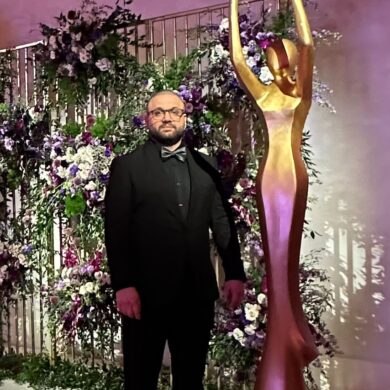
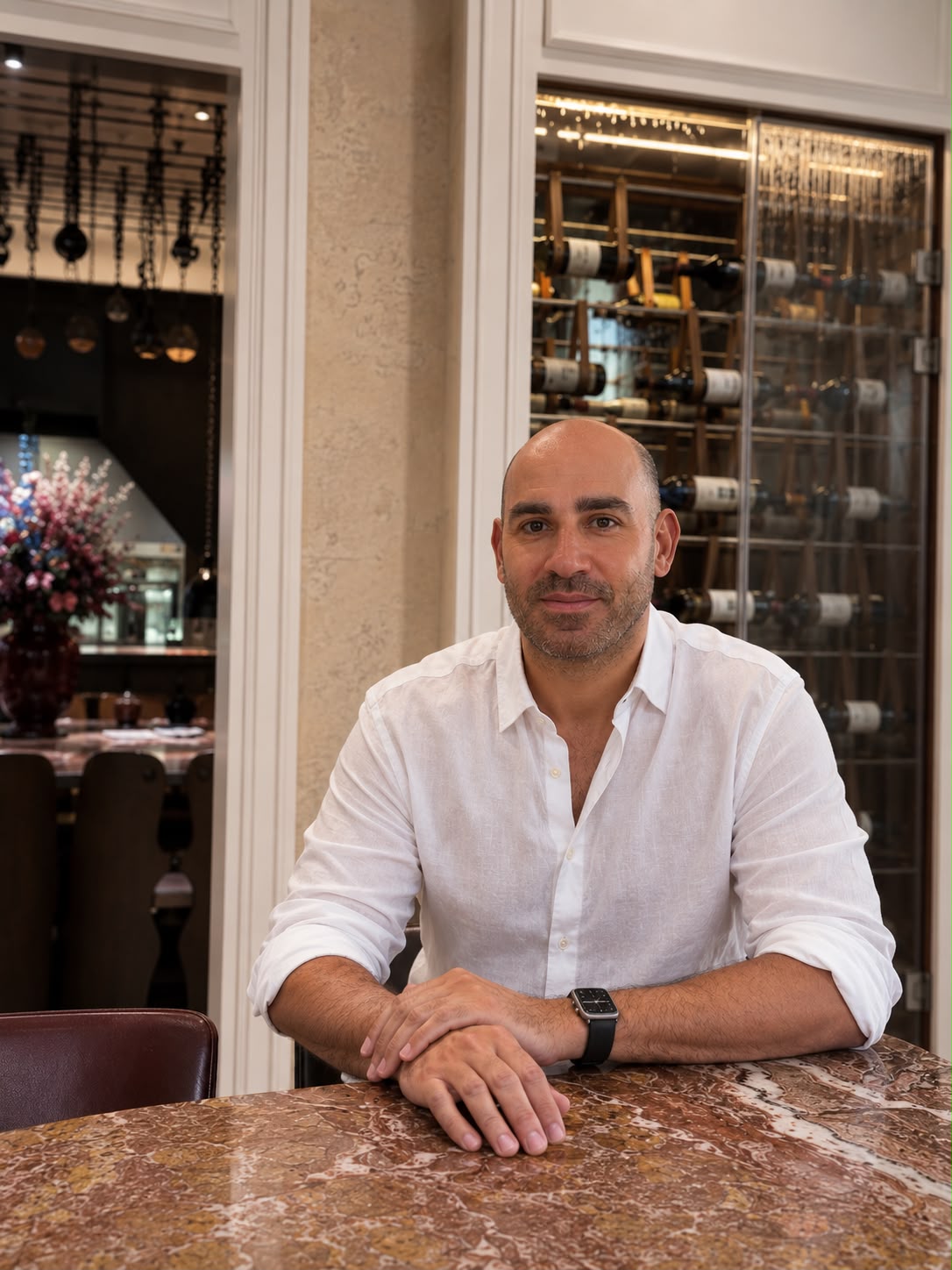
Business Journal Honoring Interview: Karim Jaber
Founder of KJ Consultancy & Forked Hospitality Holding
For our readers discovering your journey for the first time, how would you personally define the path that brought you to where you are today, leading to the creation of KJ Consultancy, Forked Hospitality Holding, and your hospitality concepts?
I have been part of the food and beverage industry for almost 25 years, and throughout that journey, I have had the opportunity to learn from every experience, challenge, and success. From the beginning, I have always believed that hospitality is about much more than serving food or creating beautiful spaces. It is about creating experiences that people remember long after they leave.
My career allowed me to work closely with restaurants and hospitality brands across operations, menu development, branding, marketing, and guest experience. Rather than viewing these as separate disciplines, I learned that they must all work together seamlessly to create a successful hospitality business. A restaurant is not simply a space; it is a story.
That philosophy eventually led me to establish KJ Consultancy and later Forked Hospitality Holding, where the goal is not only to create restaurants, but to build brands with strong identities, meaningful stories, and lasting emotional connections with guests.
Your early chapter with Addmind placed you at the center of one of Lebanon’s most influential hospitality groups. What did that experience teach you about building brands, and what ultimately pushed you toward shaping your own independent vision?
Working at Addmind was one of the most formative experiences of my career. They taught me everything. It gave me the opportunity to understand hospitality on a much larger scale—not only how successful venues operate, but how powerful brands are built through consistency, attention to detail, and unforgettable guest experiences.
Being surrounded by talented teams taught me that every decision matters, from the concept and design to the menu, service, and storytelling. The strongest hospitality brands do not simply sell food or drinks; they create a feeling, a culture, and a community that people genuinely want to be part of.
As valuable as that experience was, it also made me realize that I had my own perspective on hospitality. I wanted the freedom to create concepts from the ground up, work closely with entrepreneurs, and develop brands that reflected a more personal, thoughtful, and strategic approach.
Pastel marked an important moment in Beirut’s dining scene, while Amavi represents a more evolved stage of your hospitality vision. Looking at both, how has your approach to creating hospitality concepts changed over time?
Pastel and Amavi represent two very different moments in my journey, and in many ways, they reflect my own evolution as an entrepreneur.
With Pastel, the focus was on creating a destination—something fresh, vibrant, and exciting for Beirut. It was about introducing a concept that people connected with emotionally while proving that design, atmosphere, and food could come together to create a memorable experience.
Amavi, on the other hand, was developed with a much deeper understanding of what makes a hospitality brand successful in the long term. Beyond aesthetics, I became more focused on purpose, operational excellence, financial sustainability, and building a concept that could evolve over time without losing its identity.
Today, I never begin with a menu or an interior design. I begin with the story, the positioning, and the emotional connection I want guests to experience.
SUKI and Ma NiNou each carry distinct identities within your portfolio. What drives you to create such different hospitality experiences, and how do you ensure each one remains authentic while reflecting your overall vision?
Every hospitality concept begins with a blank page. I never want to replicate the same formula or simply adapt what has worked before. Every brand deserves its own identity, personality, and story because every audience is looking for a different experience.
SUKI and Ma NiNou perfectly represent that philosophy. They are completely different in their positioning, design language, culinary direction, and atmosphere, yet they share the same foundation: a strong sense of purpose, thoughtful storytelling, and an obsession with the guest experience.
When creating a concept, I never ask, “What restaurant should we open?” Instead, I ask, “What emotion do we want people to leave with?” That answer becomes the guiding principle behind every decision—from the menu and branding to the music, lighting, service style, and even the smallest operational details.
At what point does a hospitality concept shift from being an idea into becoming a fully defined identity—and how do you personally recognize when it is ready to be launched?
A concept becomes a true brand when every decision begins to feel inevitable rather than optional. It is no longer simply an interesting idea; it has a clear personality, a purpose, and a point of view that guides everything from the menu and interior design to the music, service, and communication.
For me, the process always starts with asking one question: “Why?” Why should this concept exist? What is it adding to the market? What story is it telling? Once those answers become clear, every other element naturally falls into place.
I know a concept is ready when the entire experience feels cohesive. Guests should immediately understand what the brand stands for without anyone having to explain it. If every touchpoint delivers the same emotion and the team genuinely understands the vision behind it, then the concept is ready to meet the world.
Launching is never the finish line. It is simply the beginning of a relationship with your guests.
In your perspective, what quietly separates a restaurant that is simply successful from one that becomes part of a city’s lifestyle and culture?
A successful restaurant serves great food, operates efficiently, and attracts customers. But a restaurant that becomes part of a city’s culture offers something much deeper—it creates a sense of belonging.
People do not return only because of the menu. They return because of how a place makes them feel. It becomes the setting for celebrations, spontaneous dinners, meaningful conversations, and everyday rituals. Over time, those moments become memories, and that is when a restaurant becomes woven into the fabric of a city.
I also believe cultural relevance comes from authenticity rather than trends. The restaurants that leave a lasting impact have a clear identity, remain consistent, and evolve naturally without losing what made them special in the first place.
Ultimately, hospitality is about creating human connection. When guests feel emotionally connected to a place—not simply satisfied by it—it stops being just a restaurant and becomes part of their lifestyle.
When developing new concepts, what tends to guide you most in the early stage—instinct, market understanding, creative vision, or identifying a clear gap?
I believe the early stage of any concept is a balance between intuition and strategy.
Instinct is where the first spark usually comes from. It allows you to imagine something that does not yet exist. However, transforming that idea into a successful hospitality brand requires a deep understanding of the market, the audience, and the opportunity.
I always look for the intersection between creativity and relevance. A concept should have a unique identity and a strong point of view, but it should also answer a genuine market need. The most exciting projects are those where you identify a gap while creating something people did not even realize they were looking for.
Ultimately, vision leads the way, while research, experience, and market understanding transform that vision into a sustainable business.

Looking ahead, what direction is your focus moving toward now, and what types of hospitality experiences do you believe are still missing in Lebanon and the region?
I believe the future of hospitality is moving toward more meaningful and immersive experiences. Guests today are looking for more than simply a meal—they want a story, a sense of community, and a place that feels connected to its culture and surroundings.
In Lebanon and across the region, there is still tremendous opportunity for concepts that combine strong culinary identities with exceptional design, service, and storytelling. We have extraordinary heritage, creativity, and talent, and I believe we can elevate our hospitality industry even further by creating experiences that compete internationally while remaining deeply rooted in our identity.
My focus moving forward is to develop concepts that are not only commercially successful but that genuinely contribute something new to the hospitality landscape.
Beyond individual projects, what kind of long-term impact do you hope your work leaves on the hospitality landscape and its evolution in Lebanon?
Beyond opening successful restaurants, my goal is to contribute to the evolution of hospitality in Lebanon by raising the standards of how brands are created, developed, and experienced.
I hope my work encourages a more strategic approach to hospitality—one where creativity is supported by strong foundations, where concepts are built with purpose, and where local talent and stories are given the platform they deserve.
Lebanon has always had a natural connection to hospitality. It is part of our culture and identity. I want to help shape a new generation of brands that preserve that warmth while introducing a more modern, innovative, and globally competitive perspective.
The greatest impact would be creating concepts that inspire others while proving that Lebanese hospitality has the potential to influence well beyond our borders.
As Business Journal Media Group recognizes your journey through this Honoring Interview, what message would you like to leave with aspiring entrepreneurs about leadership, ambition, and building something that lasts beyond trends?
My message to aspiring entrepreneurs is to stay connected to their vision while remaining open to learning and evolving. Building something meaningful requires patience, resilience, and the willingness to embrace challenges as part of the journey.
Leadership is not simply about having ideas; it is about building the right team, creating trust, and having the discipline to transform those ideas into reality. The strongest leaders are those who continue to learn, adapt, and surround themselves with people who challenge and inspire them.
Trends come and go, but authenticity endures. If you build something with purpose, genuine passion, and a deep understanding of the people you serve, you create something that can stand the test of time.
Success is not measured only by what you build today, but by the lasting impact it continues to have long after you began.